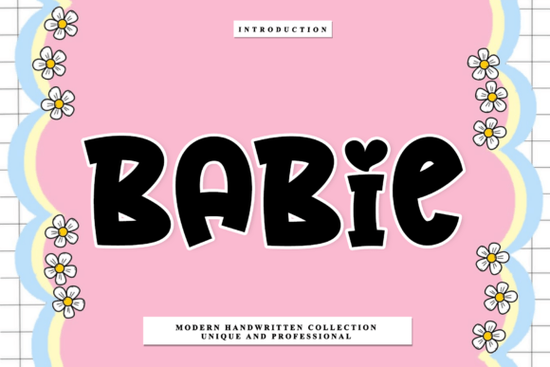
If you're searching for a script font that blends calligraphy with a warm, handmade feel, Babie Font is worth a close look. Its sweeping, looping ascenders give every letter a custom, artisanal touch that stands out without being too flashy. Whether you're working on food packaging, boutique labels, or editorial headlines, this font brings a sense of care and craftsmanship to your layouts.
What makes Babie Font different from other script fonts?
Many script fonts lean either strictly formal or overly casual. Babie sits right in the middle. The letterforms are rhythmic and sophisticated, but the organic curves keep them approachable. That balance makes it a strong choice for projects where you want elegance without cold perfection.
The looping ascenders (think the tall parts of “b,” “d,” “h,” “k,” “l”) are intentionally dramatic. They create a visual flow that guides the reader's eye from one word to the next. This is especially useful for short headlines, logos, or product names where every character needs to earn its place.
Who should use Babie Font?
This font fits a few specific audiences:
- Print-on-demand sellers – Great for mockups of mugs, tote bags, or apparel with a hand-drawn vibe.
- Small food and beverage brands – Wine labels, chocolate packaging, or coffee shop signage all benefit from that artisanal feel.
- Invitation and stationery designers – Wedding suites, save-the-dates, and thank-you cards look more personal with this script.
- Editorial and lifestyle publishers – Use it for pull quotes or section titles in print or digital magazines.
If you've worked with other elegant scripts before, you might also like Midnight Ganache Font for its rich, dark tones, or Darling Signature Font for a lighter, more delicate touch.
How do I pair Babie Font with other typefaces?
Since Babie is a bold script with noticeable flourishes, it works best when paired with a simple, clean sans-serif or a minimal serif. Avoid pairing it with another decorative font – that can easily get messy.
Some solid options:
- Use a light sans-serif like Open Sans or Lato for body copy.
- Try a modern serif such as Playfair Display for an upscale editorial look.
- Keep all-caps headings in Babie to a minimum – one or two words is plenty.
If you want complementary script options, check out Sweary Font for a bolder, almost grunge style, or Threesome Font for a playful, connected script that works for short phrases.
What projects is Babie Font best for?
From our experience testing it, Babie shines in:
- Product labels – Especially organic, handmade, or premium items.
- Social media graphics – Overlay it on soft, neutral backgrounds or natural textures.
- Logo design – Works well as a wordmark for small businesses or personal brands.
- Book covers and chapter titles – The loops add a narrative, almost whimsical quality.
One thing to note: because of those extended ascenders, you'll want to allow extra space above the text. Tight leading can make the loops feel cramped.
Is Babie Font easy to read for longer text?
Not really, and that's okay. Script fonts like this are meant for short displays. Babie works great for a headline or a call-to-action, but using it for paragraphs would tire the reader. Save it for where you want impact – a single line, two words, maybe a short tagline.
If you need a script that handles longer blocks more comfortably, Sweet Hearts Font has a more relaxed rhythm and slightly shorter ascenders, making it a good alternative for multi-line quotes.
Practical checklist before you buy
Before you download Babie Font, run through this quick list:
- ✔ Check the license – does it cover commercial use, print-on-demand, or web embedding?
- ✔ Test it in a mockup – see how the ascenders look at your exact size.
- ✔ Pair it with your body font – make sure there's enough contrast.
- ✔ Think about kerning – scripts often need letter-spacing adjustment in certain pairs.
- ✔ Consider alternatives – if Babie feels too ornate, try a more restrained script like Darling Signature.
Final tip: When using Babie in a logo, avoid adding additional decorative elements (swirls, badges, extra lines). Let the font's own loops do the work. A clean layout around it makes the script feel intentional, not busy.
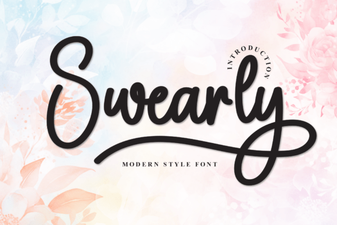 Discover Swearly Font: a Playful Display Typeface
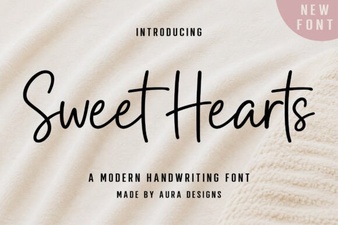 Sweet Hearts Font: Creative Design Ideas & Uses
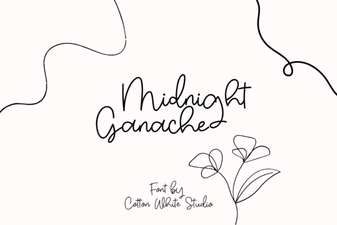 Midnight Ganache Font: Creative Uses & Design Inspiration
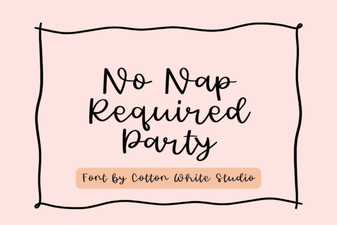 No Naps Required: a Lively Party Font for Creative Projects
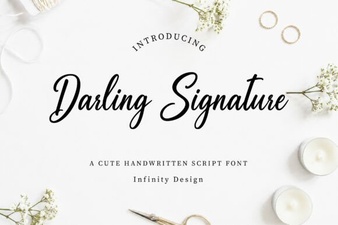 Darling Signature Font: Creative Handwriting for Your Designs
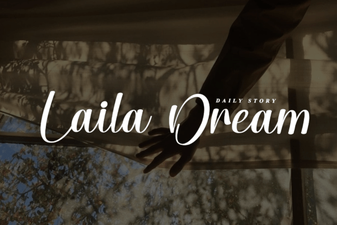 Laila Dream Font: Creative & Elegant Projects